Designing for Screen Reader Accessibility
This informational guide explains key design principles to create web pages that are accessible to screen reader users.
Context
I created this project for an assignment in an Information Design class at the University of Minnesota.
The assignment asked us to conduct research on a topic that interested us and to explain what technical communicators need to know about our chosen subject.
Because I am passionate about digital accessibility, I chose to study screen readers.
I learned how screen reader users interact with a web page, and what design choices act as barriers to their access.
Process
After researching the design principles that are essential to screen reader accessibility, I practiced those principles by creating a Google Sites page to communicate my research.
The web page I created uses heading structure appropriately, includes descriptive alt text, and has clear, unambiguous link text.
Impact
Image Gallery
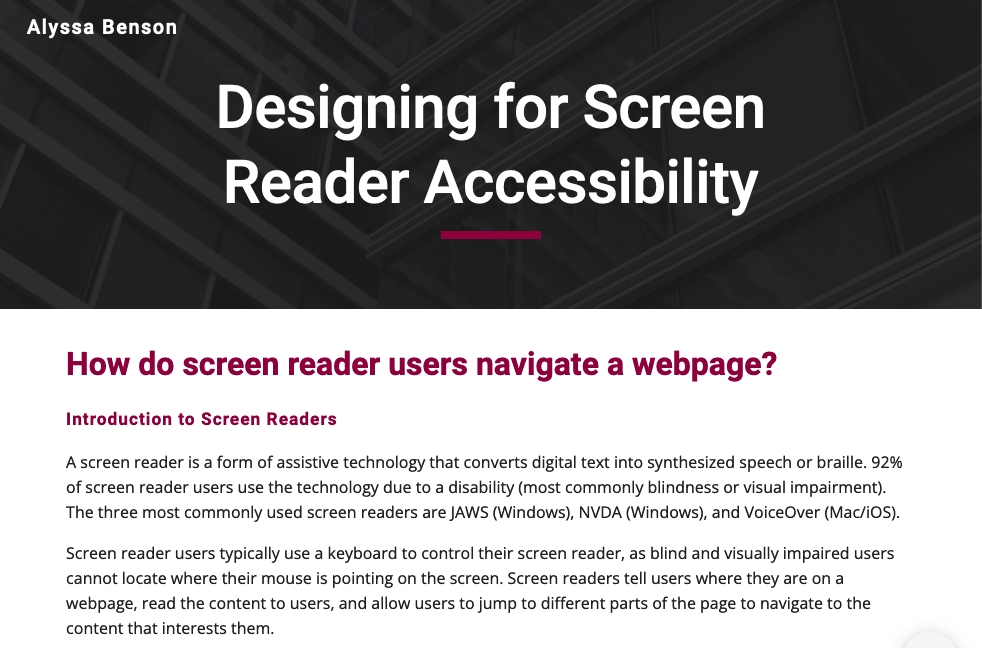 The header and introduction of my Google Sites page.
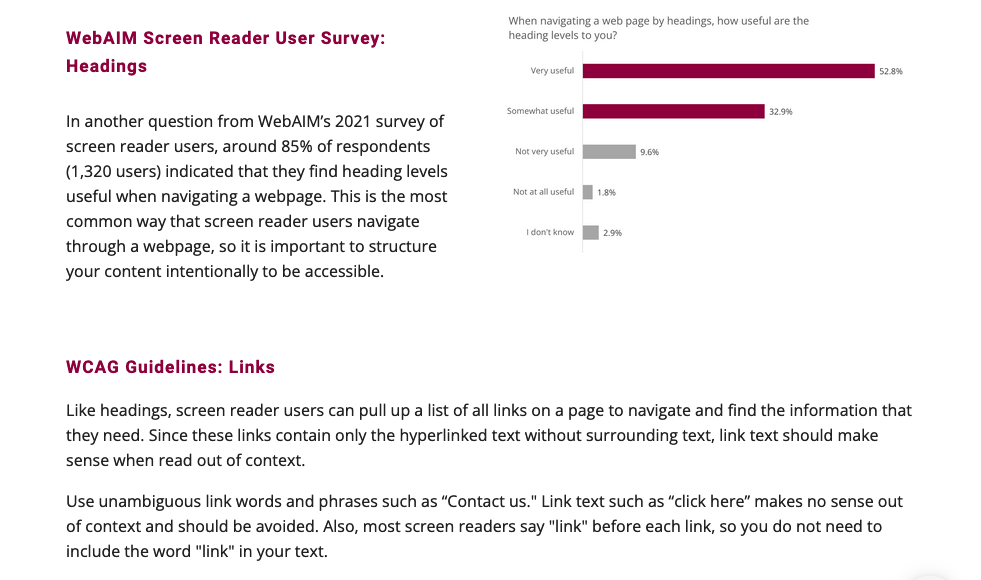 A sample of my web page's body text.